

1) The oil in a refrigeration system
a : What is the function of oil in a refrigeration system?
The oil has a key function in a refrigeration system because it contributes to ensure:
- Lubrication of the mobile parts of the compressor
- Evacuation of the heat due to frictions of the mobile parts
- Air tightness between the compression stages in rotative compressors.
b : What are the consequences of oil presence in the refrigeration system ?
All the oil does not stay in the compressor cranckase and a part is brought into the refrigeration system:
- During stages of start-up of the compressor, due to the sudden evaporation of the refrigerant dissolved in the oil
- By the piston rings in piston compressors
- By its close contact with the refrigerant in rotative compressors.
The volume of oil ejected by the compressor circulates with the refrigerant and has the following effects:
- Decrease in the oil level in the crankcase, which can lead to a mechanic breakdown
- Modification of the quality, physical and thermodynamic properties of the refrigerant
- Decrease in the efficiency of exchangers (evaporators and condensers); the lost of capacity can reach 30% with rabbet tube evaporators
- Oil retention in « oil traps » and low speed areas. This oil may return suddenly and generates a liquid hammer (slugging)
- The damage into the compressors are often irreversible.
2) What are the different techniques of oil separation?
To enable the oil ejected of the compressor to return to the crankcase, it is necessary:
The four main techniques selected in the design and the manufacture of oil separators intended to refrigeration systems are:
The manufacturers of oil separators will select one or several separation techniques according to the level of efficiency researched.
Coalescence can be obtained with metallic sieves or coalescent cores which will be then necessary to replace regularly.
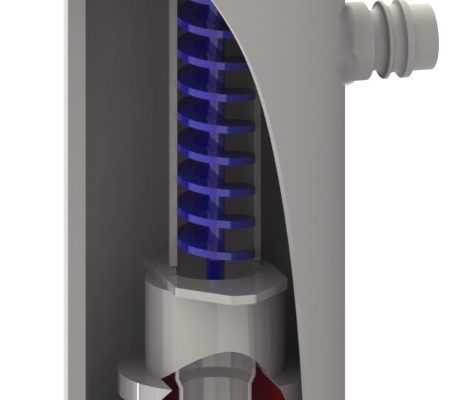
Centrifugation can be obtained with turbulators, helicoidal systems or special fitting in the separators (cyclone).
The patented system of oil separation selected by CARLY for its oil separators TURBOIL has the advantage to combine several techniques:
The internal fitting of TURBOIL separators enables to differentiate the separation and oil reserve stages so as to limit the risks to carry over the oil stored.
3) Conclusion
It is possible to optimize the oil management in a refrigeration system by respecting the 3 following rules:
-----------------------------------------------------------------------------------------------------------------------
You have been interested in this article, do not hesitate to send us your comments, questions, or experience feedbacks:
info@carly-sa.com.
4) Management of oil return
The oil separator ensures the separation of the oil contained in the refrigerant.
The oil, retrieved in the separator, gets back to the crankcase(s) of the compressor(s) thanks to one of the following oil return management systems.
a : Mono-compressor circuit
b : Multi-compressors circuit
c : High pressure oil return
a : Mono-compressor circuit
In a thermodynamics system with only one compressor, oil separation is usually ignored.
But it is often necessary, especially when there is a long distance between the cold rooms (refrigerated cabinets) and the compressor.
The oil separator should then be connected to the discharge pipe of the compressor and the oil separated gets back directly to the crankcase of the compressor.
This kind of assembly is easy and very efficient.
The wide range of CARLY TURBOIL enables to optimize their selection, for small capacities (< or = 80kW).b : Multi-compressors circuit
In a circuit with several compressors in parallel (rack assembly), the oil management system must be designed according to the application.
For example, a multi-compressors installation for a supermarket will not work the same way as the installation of a refrigerated warehouse.
It is very important to take into account all the working parameters of the refrigeration installation in order to select the most suitable oil separator(s).Some principles of oil return management are described hereafter.
b-1 : Oil return at suction
A common oil separator for all the compressors is connected to the discharge collector of the rack.
The oil return is made in the suction collector.
The oil present in the suction collector is sucked by the compressors.
The pressure drops in the suction pipes, between the compressors and the collector, are not exactly the same.
That is why the quantities of oil sucked by the compressors can be different from those that were ejected, and cause some differences in the levels of the compressors crankcases.
Some oil levels abnormally high or low can cause some damages, or even the breakage of the compressors.
It is possible to maintain the same oil level in the different compressors crankcases by installing a balancing pipe.
This pipe must have a section big enough to:
- Avoid siphoning phenomenon between the crankcases
- Ensure a balancing of the oil levels between the crankcases
- Ensure a balancing of the pressures between the crankcases. (Please refer to the recommendations of refrigeration compressors manufacturers)
b-2 : Oil return to the crankcases
In order to minimize the differences in oil levels of the compressors crankcases, the oil return can be made directly towards the compressors thanks to the balancing pipe.
b-3: Centralized oil return
This assembly is the most frequently used as soon as the refrigeration rack:
- Supplies a big number of cold rooms or refrigerated cabinets
- Is located at a long distance from the condenser(s) and the evaporators.
When starting up the installation, it is often necessary to fill in the oil traps and the siphons.
It is also essential to have enough oil reserve.
The oil separated is returned towards an oil receiver.
The receiver enables to supply the oil level regulators, which function is to maintain the oil levels stable in the compressors crankcases.
An excess pressure in comparison with compressors crankcases is maintained in the oil receiver, so as to enable a good oil supply of the oil level regulators.
A differential valve has the function to keep an excess pressure in the oil receiver and to eject the excess of pressure towards the suction collector.b-4 : One separator per compressor
The oil separator is usually selected according to the maximal refrigerating capacity of the rack.
When the rack is fitted with more than 3 compressors and that only one compressor is working, the variation in the flow of refrigerant may make the efficiency of the oil separator decrease.
Then it is recommended to install one separator per compressor.
This assembly enables on the one hand not to be limited in the number of compressors installed in parallel, and on the other hand to be able to adapt to all kinds of installations.
The association compressor/oil separator is usually easier and the efficiency is always optimal.
According to the complexity of the installation, the oil returns of the separators will be made directly to the corresponding compressors or to an oil receiver.
c : High pressure oil return
This technology uses oil separators without floating device.
The oil separated is stored in the lower part of the oil separator and makes the oil reserve.
The oil gets back to the compressors crankcases through electronic oil level regulators.
Actually, the oil is stored in high pressure and cannot get back to the crankcases, neither directly, nor through mechanical oil level regulators.
Mechanical regulators cannot work with an oil return in high pressure because their working principle relies on an equilibrium of forces acting on the floating device.
According to the complexity of the installation, it might be necessary to use an additional oil receiver.
The receiver enables to store the quantity of oil necessary to fill in the siphons and the oil traps of the installations.
Nota
The efficiency of an oil separator never reaches 100%, whatever its technology.
Using an oil separator in a rack does not exempt the designer or the installer from respecting the common rules.
When selecting the oil separator and choosing an oil return circuit, it is necessary to take into account all the parameters of the refrigeration installation and its working.
------------------------------------------------------------------------------------------------------------------------
You have been interested in this article, do not hesitate to send us your questions and your feedback of experiences by sending a message to the following address :
info@carly-sa.com.