



1) Causes of moisture
Several reasons may be responsible for the presence of moisture in a refrigeration system:
HFC refrigerants are 25 times more hygroscopic than CFC refrigerants.

Hygroscopic aspects of mineral and polyol-ester oils, and some refrigerants

Hygroscopic aspect of mineral and polyol-ester oils
The absorption consists in making a substance (gas, liquid) get into another (gas, liquid, solid) and to keep it linked by attraction or chemical modification.
On the other hand, adsorption is a surface phenomenon and it consists in fixing a molecule (gaseous or liquid) at the surface of a solid by the intermediate of attraction forces (reversible reaction) or chemical interaction.
2) The consequences of the presence of moisture
Within a refrigeration system, the presence of moisture can have several consequences:
Blocking the expansion valve: creation of a ice cap
Damages to the brazed assembling: corrosion, the water trapped in the small gaps may turn into ice that makes the tubes burst

These acids cause a corrosion of reactive metals, especially copper metals, and the creation of metallic sediments that may fill in the pipes. They are oil-soluble, their reaction is very slow and they are present in small quantity in the oil of the compressor.
For POE oil (ester), a small quantity of moisture is enough to start the reaction of acid creation. This phenomenon is due to the reversibility of the reaction of ester oil manufacturing (esterification): Organic acid + alcohol ↔ ester + water
Note : Organic acids may also be created during the decomposition of oil at high temperature in presence of air and oxidizing agents (oil oxidation).
3) The necessary precautions in order to avoid the introduction of moisture
In order to avoid any introduction of moisture inside a refrigeration system, a preventive treatment, realized properly in the rules, must be performed during the installation or a maintenance intervention:
CARLY - DCY filter drier is an essential component for the system protection. It has the capacity to catch the damaging elements for refrigerant and oil, before they might cause non-reversible damages.
The 3 main functions of the filter drier are:

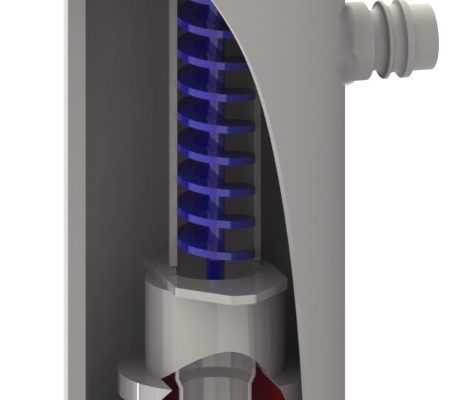
A filtration element at the outlet of CARLY filter drier has the function to retain solid contaminants.
On the other hand, moisture and acids are caught at the surface of molecular sieve and activated alumina : it is said they are « adsorbed ».

The volume and the size of the pores are important parameters:
- A big pore sieve will be a desiccator with a high capacity of adsorption for high moisture,
- A small pore sieve is more efficient for rather low moisture,
- When the pores are small enough, the sieve becomes selective regarding the big molecules,
- Thanks to its big internal area, the molecular sieve offers a very high capacity of adsorption: it is able to adsorb till 20% of its own weight in steam.
Moisture adsorption:
Adsorption capacity of molecular sieve = 3 times the one of activated alumin
Acid retention:
Adsorption capacity of activated alumina = 7 times the one of molecular sieve
The CARLY filter drier is made of 70% molecular sieve and 30% activated alumina. This composition, recommended by ASERCOM, guarantees to the installer the perfect removal of moisture from the circuit and a very good acid retention.
The efficiency in moisture drying and acid neutralization is directly proportional to the volume of active chemical agents, present in the filter drier.
This is the reason why CARLY has always preferred the solution of free grains for its DCY filter drier, in order to optimize the internal volume.
It is important to detail that the filter design avoids any risk of solid particle release in the circuit.
Most other filter driers of the market have a solid core inside which agglomerates the chemical agents with a resin. For a given reference, we can remark, while checking the actual volume of active chemical agents, a drying and acid neutralization capacity inferior, on average, of 30% in comparison with CARLY – DCY.
When choosing a brand of filter drier, remember that what is inside is what matters.

In conclusion, we will remind how important is the installation of a sight glass, VCYL type, after the filter drier, in order to be able to monitor easily and quickly whether it is necessary to replace the filter drier.